Children change what a good day in Yogyakarta looks like. The temples are hot, the drives are short but frequent, and the best stop of the day is often the one where nobody has to climb anything. A Yogyakarta tour package built around a family is mostly a logistics decision: how long each drive runs, when the toilets appear, and whether the afternoon ends before the children do. These are the routes we run most often with parents, and the prices are ours.
Which tour suits which age
Age decides more than anything else. Under five, the city is enough. The Kraton opens Tuesday to Sunday, 08:30 to 14:30, and costs from around IDR 15,000. Taman Sari runs 09:00 to 15:00 with last entry at 14:30. Malioboro is free and best after 17:00, when the food carts come out and the street cools down.
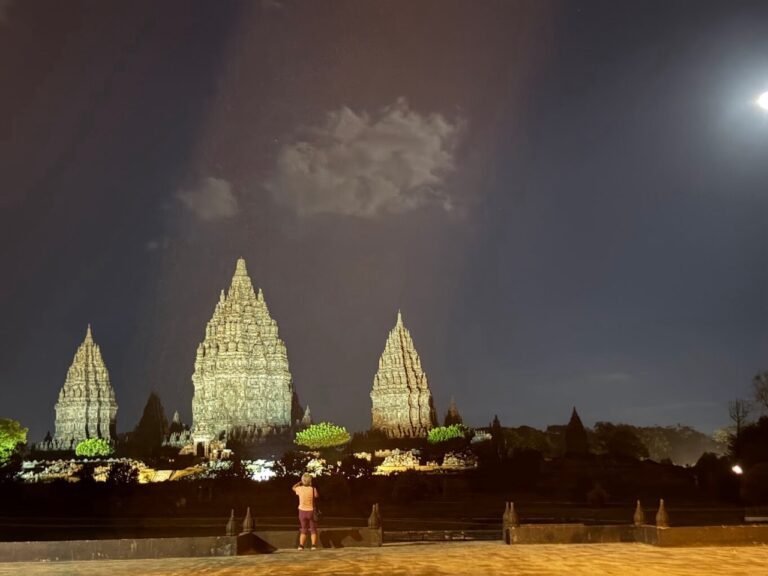
Six to ten can take one temple a day if the visit stays under two hours. Prambanan is the easier of the two: about 17 km east, roughly 45 minutes in the car, and flat ground between the temples once you are through the gate. Borobudur is about 40 km, roughly an hour, and it is a climb.
Eleven and up can do what adults do, including Jomblang cave, where you go down 60 metres on a rope. The daily quota is around 200 people and the ticket is Rp 500,000, so it needs booking ahead. Read the Jomblang cave guide before you promise it to a nervous child.
Why the sunrise slot can wait
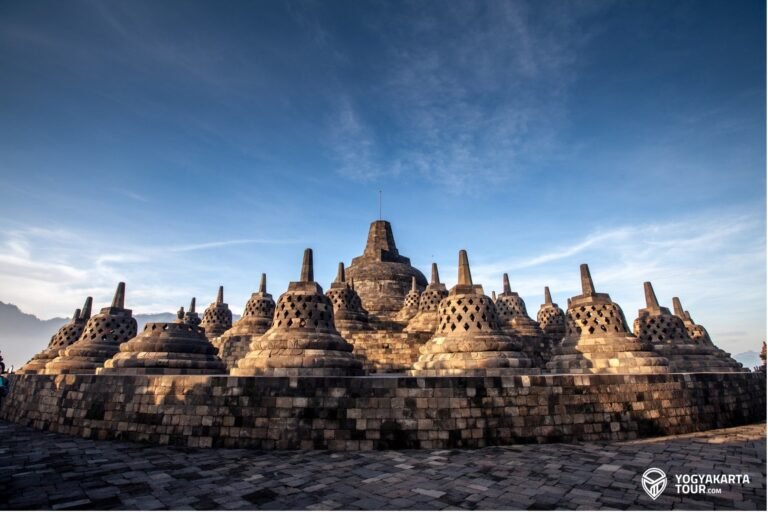
Borobudur sunrise is a separate early slot, around 04:30, and the temple is an hour from the city. The car leaves around three in the morning. For a family with small children that usually costs more in mood than it returns in photographs. The temple area is open 06:30 to 16:30, and a 07:00 arrival still beats the worst of the heat and the bus crowds.
If you want the sunrise, the Borobudur sunrise tour from USD 90 is the short version. Put it on your second morning, not your first, once the children have slept off the flight.
Pindul instead of Jomblang
The 60 metre rope descent is the reason most families with young children should look at Pindul instead. Pindul is the cave you float through rather than lower yourself into, and it is sold alongside Jomblang: both caves from USD 105. Jomblang on its own starts at USD 90. If your children are old enough for the harness, take Jomblang. If they are not, take Pindul and keep the rest of the day light.
One warning that saves a morning: Jomblang’s light beam is best roughly 10:00 to 12:00, so the cave day cannot start late.
Car seats, toilets and the kit
Ask for a child seat in the booking message, in writing, with the age and weight of the child. If the answer is no, bring a booster or plan to hold a small child on a short drive.
- Toilets: the big sites have them at the entrance. On the road, ask the driver to stop before the temple rather than after.
- Kit: hats, sunscreen, a change of clothes for each child, wet wipes, and a refillable bottle.
- Footwear: Prambanan’s ground is uneven and hot by 11:00. Sandals with a strap are better than flip flops.
- Car snacks: keep a bag in the vehicle. A hungry child at a temple gate is a slow morning.
Food, heat and the afternoon break
Yogyakarta is hot by mid-morning in the dry season, May to September. In the wet season, November to March, the rain tends to arrive in the afternoon. Either way, build the day around a break between 12:00 and 15:00. A hotel pool is worth more to a family than a second temple.
Food is cheap and easy. Ask the driver to stop where local families eat, order noodles, rice or grilled chicken, and keep it plain for the children. Beringharjo market is the daytime stop for batik and snacks.
Meltdown management, in practice
Two things cause most of them: heat and a schedule with no exit. Book one paid site per day and let the second stop be optional. Tell the driver a fixed return time so nobody negotiates in a car park at 15:00 with a tired child.
The Merapi jeep tour is the usual exception. Pickups run 03:45 to 04:30 and the trip is five to six hours door to door, which is a long morning for a young child. The Merapi sunrise and Prambanan tour from USD 120 is excellent for older children and hard work for toddlers.
What a family Yogyakarta tour package costs
Day tours start at USD 90 for Borobudur sunrise, USD 105 for Jomblang and Pindul, and USD 120 for Merapi and Prambanan. Multi-day trips are quoted per itinerary, because hotel class, group size and season change the total. For a family, that means the price depends on how many rooms and how many car seats you need.
Budget the temple tickets separately. The foreign ticket at Borobudur and Prambanan is around IDR 400,000 each, so four tickets is a real line in the plan. Ask at the desk about rates for children.
Start from our Yogyakarta tours page and tell us the ages, the dates and whether you need seats. A family itinerary that fits one car and one nap is a different document from the standard three-day tour, and the airport guide will help you plan the arrival day at YIA, about 45 km from the centre.
Frequently asked questions
Can a family with a toddler do Borobudur?
Yes. Skip the 04:30 sunrise slot and arrive at 07:00, half an hour after the temple area opens. Keep the visit to an hour and stay on the lower terraces.
Is Jomblang cave suitable for children?
Only for older children who are comfortable with a 60 metre rope descent. For younger ones, take the Jomblang and Pindul combination from USD 105 and do the Pindul float.
How many sites should we plan in one day?
One temple in the morning and one light stop in the afternoon. Anything more tends to end early and badly.
Do you provide child seats?
Tell us the ages when you book and we will confirm what is available for your dates. Bring a booster if your child needs a specific size.
What is the best month for a family trip?
May to September, the dry season, for outdoor days. November to March is wetter but quieter at the temples.