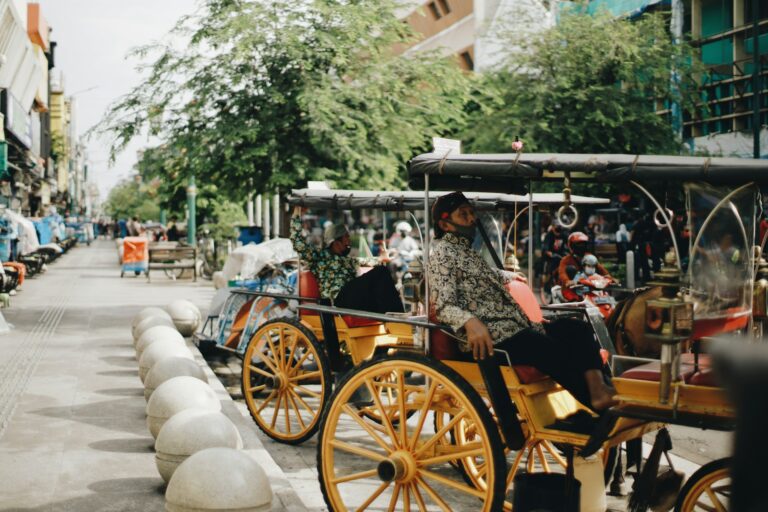
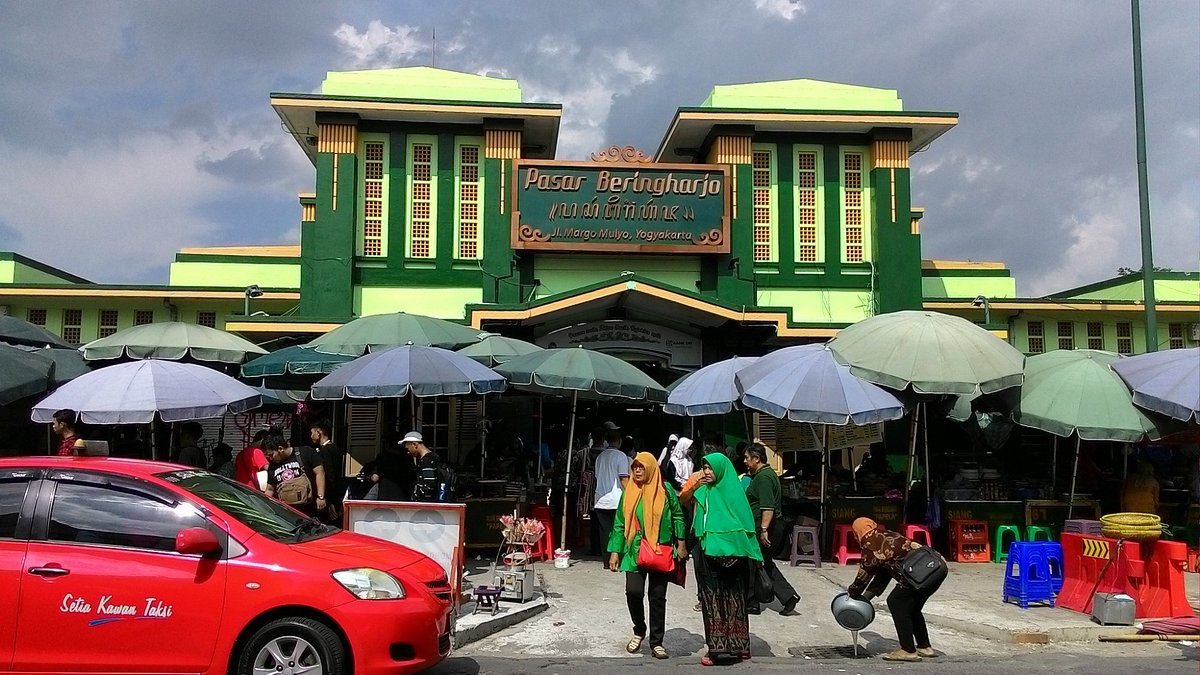
Beringharjo is the market to visit if you want to understand Yogyakarta rather than just photograph it. It sits on Jalan Malioboro, a short walk from the kraton, and it has been trading since the 18th century. Batik by the metre, jamu ingredients, Javanese snacks, leather bags and second-hand antiques are all under one roof — and the prices are among the best in the city if you are willing to bargain.
Pasar Beringharjo at a glance
| Location | Jalan Malioboro, Gondomanan, Yogyakarta |
| Opening hours | Generally 08:30–21:00, but each stall sets its own hours |
| Floors | Ground: food and spices · Upper: batik, crafts, antiques |
| Payment | Cash is king; some stalls take QRIS, few take cards |
| Best time | Weekday mornings, before the Malioboro crowds build |
History of Beringharjo Market
The area was a banyan forest when the Yogyakarta palace was established in 1758. Not long after, the forest edge became a place of trade for the people of the new city — the beginning of the market that stands there today.
The modern building dates from 24 March 1925, when the palace commissioned the Nederlandsch Indisch Beton Maatschappij to build concrete stalls. Eleven were completed by the end of August that year, with more added in stages. The name Beringharjo was formalised under Sultan Hamengku Buwono VIII: bering for the banyan forest, harjo for the prosperity it was expected to bring. The art deco facade from that rebuild is still visible.
The market sits on the philosophical axis that runs from Merapi through the kraton to the sea, and its function has never really changed: textiles, food and herbs, sold by the same families across generations.
What to buy, floor by floor
Ground floor: food, spices and jamu
This is where Yogyakartans actually shop. Look for gula jawa (palm sugar), coffee, dried spices, rempah mixes and the ingredients for jamu — the Javanese herbal drinks sold in bottles and sachets. Snacks travel well: bakpia, yangko, geplak and kripik are sold by the box, cheaper than at the shops on Malioboro.
Upper floors: batik and fabric
The batik section is the reason most visitors come. You will find printed batik, hand-stamped batik cap, hand-drawn batik tulis, and ready-made shirts, dresses and sarongs. Prices run from around Rp 50,000 for a printed sarong to several million rupiah for a hand-drawn kain. Ask which is which — sellers are usually honest if you ask directly. The market also sells batik ninik and lurik, the palace-style fabrics.
Second floor: crafts, leather and antiques
Bags, wallets, wooden carvings, wayang puppets, old cameras, coins and second-hand jewellery. This is the most enjoyable floor to browse if you are not looking for anything in particular.
Prices and bargaining
Prices are not fixed, and the first number is rarely the final one. Ask the price, look genuinely interested, and offer around 20 to 30 percent less — then meet somewhere in the middle. Walking away is part of the ritual, but do it politely.
Two things keep it fair: buy from the stall you actually want, and do not spend twenty minutes haggling over a few thousand rupiah. For a foreign visitor the difference is small; for the seller, it is the day’s margin.
Opening hours
The market is generally listed as open from 08:30 to 21:00, but individual stalls follow their own schedules. Batik sellers tend to open early and stay late; food stalls open earlier in the morning and often close by mid-afternoon. If you are coming for something specific, arrive before 15:00 to be safe.
How to get there
Beringharjo is on Jalan Malioboro, at the northern end near Vredeburg fort. From Malioboro street it is a five to ten minute walk; from the kraton, about fifteen minutes. Taxis and ride-hailing cars drop off on the side streets, since Malioboro itself is partly pedestrian.
It combines easily with a city walk: the kraton, Tamansari and Malioboro are all within walking distance, and our Yogyakarta city tour includes the market as a stop.
Practical tips
- Bring cash in small notes; change is easier and QRIS is not universal.
- Go early. The market opens around 08:30, and by 11:00 the tour groups arrive.
- Wear comfortable shoes — the floors are uneven and you will walk a lot.
- Watch your bag in the crowded aisles, as in any busy market.
- Ask before photographing stallholders; most say yes, some prefer not.
- Avoid the last week of Ramadan if you dislike crowds — it is the busiest period of the year.
Frequently asked questions
What can I buy at Beringharjo Market?
Batik and fabric, Javanese snacks, spices and jamu ingredients, leather bags, wooden crafts, wayang puppets and second-hand antiques.
What are the opening hours?
Generally 08:30 to 21:00, but individual stalls open and close at their own times — batik sellers stay later than food stalls.
Is it cheaper than Malioboro street?
Yes, usually. The same batik or snack is often cheaper inside the market than in the shops along Malioboro.
Can I pay by card?
Rarely. Bring cash; some stalls accept QRIS.
How long should I spend there?
An hour for a quick browse; two hours if you are buying fabric and comparing stalls.
Sources and further reading
- Pasar Beringharjo: sejarah, filosofi, jam buka — Detik Jogja (history and opening hours).
- Pasar Beringharjo showcases batik, snacks and crafts — RRI, 2026.
- Pemerintah Kota Yogyakarta — city news on the traditional markets.
Written by the Yogyakartatour.com team, a licensed local operator based in Yogyakarta. Opening hours and prices were checked in November 2026; individual stalls change their hours without notice.
Read next
Beringharjo sits at the north end of Malioboro, five minutes from the street and 20 from the Kraton. The city centre guide shows how to fit it into one day. For the rest of the city, see things to do in Yogyakarta.