
The best time to visit Borobudur is the dry season, May to September, and within the day, the first two hours after opening. That is when the light is soft, the temperature is bearable, and the tour buses have not yet arrived. But the temple works year-round — the rainy season brings fewer people and greener hills, and the sunrise program runs in every month.
Season by season
| Period | What to expect | Verdict |
|---|---|---|
| May–September | Dry, clear mornings, cooler evenings | Best overall; July–August is the busiest |
| April and October | Transition months, occasional showers | Good value, fewer crowds |
| November–March | Rainy season, afternoon storms, green landscape | Quiet and cheap; sunrise is a gamble |
| Vesak (usually May) | Lantern procession, pilgrims, very crowded | Worth it once, book early |
The best time of day
Sunrise (around 04:30–05:30)
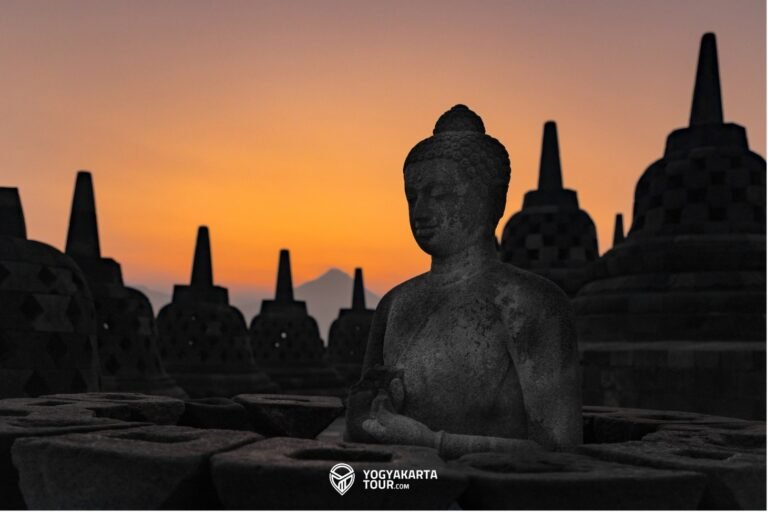
The sunrise program is a separate early entry, not the normal ticket. Visitors gather at the Manohara area before dawn and go up to the temple for first light. It is the most atmospheric way to see Borobudur, and also the most dependent on weather: in the wet season, cloud often hides the sun.
Sunrise slots are limited and sell out in high season, so book ahead rather than turning up at 4 AM. If the sky is overcast, the temple at first light is still worth it — the crowds are thin and the reliefs are easier to see.
Early morning (06:00–09:00)
If you are not doing the sunrise program, arrive at opening. The light is still low, the temperature is comfortable, and the upper terraces are quiet for the first hour or two. By 10:00 the tour groups arrive and the stone starts to radiate heat.
Late afternoon (15:00–17:00)
The last two hours before closing give warm light and long shadows, which photographers prefer. It is busier than early morning, but the light is arguably better.
Sunset from Punthuk Setumbu
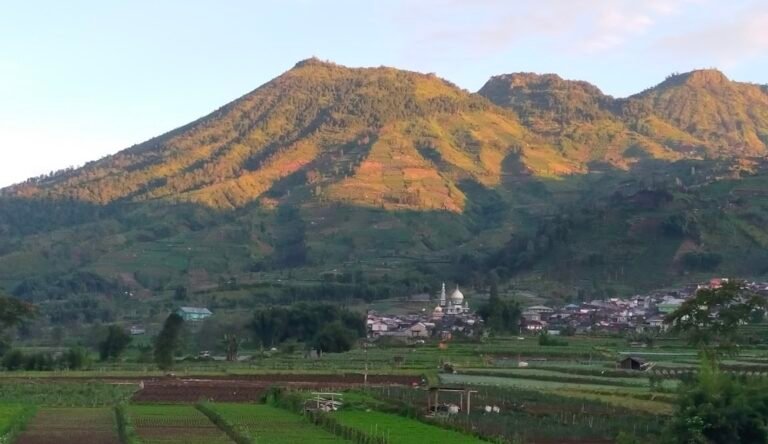
Many visitors watch the sun rise or set from Punthuk Setumbu, a hill about 2 km away with the temple framed by mist and Mount Merapi behind it. It is not the temple itself, but it is the classic postcard view.
Tickets: grounds vs climbing the structure
There are two levels of access, and the difference matters more than the price. The regular ticket lets you walk the grounds and the base; climbing the structure itself requires a separate, quota-limited ticket with a timed session.
| Ticket | Indonesian adult | Foreign adult |
|---|---|---|
| Regular (grounds) | Rp 50,000 | Rp 400,000 |
| Climb the structure | Rp 120,000 | Rp 455,000 |
| Combined Borobudur + Prambanan | Rp 75,000 adult (Indonesian visitors) | |
Prices are set by the operator and change from time to time — confirm on the official ticket page before you buy, especially for the climb, which has a daily quota and a timed entry.
Crowds and prices
- Busiest: July–August school holidays, the last week of December, and Vesak.
- Quietest: January–March, with the trade-off of rain.
- Best balance: May, June, September and October.
Hotel rates around Borobudur rise sharply in the peak weeks. Staying in the village the night before is the easiest way to be at the gate for opening without a 4 AM drive from Yogyakarta.
A simple plan for the best visit
- Sleep near Borobudur the night before, or leave Yogyakarta by 04:00.
- Take the sunrise entry if you want the top of the temple at first light.
- Walk the reliefs clockwise from the base to the top — the narrative is designed to be read that way.
- Leave by 09:30, before the heat and the groups, and continue to Prambanan or the Merapi slopes.
Our Yogyakarta tour packages include the early start and the tickets, which avoids the queue at the gate. If you are coming from the airport, the airport-to-Borobudur route explains the transfer options.
Why Borobudur is worth the early alarm
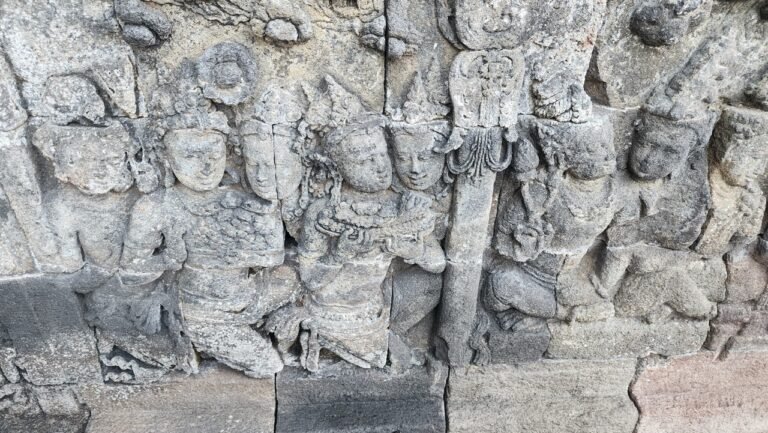
Borobudur is the largest Buddhist temple in the world: nine stacked platforms, 2,672 relief panels and 504 Buddha statues, with 72 stupas and a central dome at the top. It was built in the 9th century and abandoned for centuries before being rediscovered and restored; UNESCO listed it in 1991.
The layout is a mandala, and the pilgrimage route spirals upward from the base to the summit. Walking it clockwise, with the reliefs on your right, is the way it was designed to be read. That is also why early morning works so well: fewer people means you can actually follow the panels instead of queueing behind a group.
Worth combining nearby
Three stops are close enough to add to the same morning. Mendut, about 3 km east, is a smaller temple with a seated Buddha and a quiet atmosphere. Pawon, between Mendut and Borobudur, is a compact 8th-century temple usually visited in ten minutes. Punthuk Setumbu, 2 km south, is the hill for the postcard view.
If you have a full day, combine them with Prambanan in the afternoon, or add the Merapi lava tour on the way back to the city.
Frequently asked questions
What is the best month to visit Borobudur?
June, July and September: dry, clear and slightly less crowded than August. May and October are good alternatives.
What time should I arrive at Borobudur?
For the sunrise program, before 04:30 at Manohara. Otherwise, at opening around 06:00, and certainly before 09:00.
Is sunrise at Borobudur worth it?
Yes, if the sky is clear. In the rainy season the sun is often hidden, so plan a backup morning rather than a single attempt.
Do I need a separate ticket to climb the temple?
Yes. Climbing the structure requires a quota-limited ticket with a timed session, separate from the regular grounds ticket.
Can I visit Borobudur and Prambanan in one day?
Yes. Do Borobudur at sunrise, then drive across the city to Prambanan for the afternoon or sunset.
Sources and further reading
- InJourney Destination Management — official operator of Borobudur.
- Official ticket page — current prices, sunrise and climb sessions.
- Borobudur Temple Compounds — UNESCO World Heritage listing.
- Update harga tiket Borobudur 2026 — Disway, 2026 (regular and climb prices).
- Menyambut mentari dini di Borobudur — Kompas.id, January 2026 (sunrise access at Manohara).
Written by the Yogyakartatour.com team, a licensed local operator based in Yogyakarta. Prices were checked in November 2026; the operator adjusts them periodically, so confirm on the official ticket page.