A Yogyakarta photography tour is a schedule problem before it is a gear problem. The light here is generous, but it arrives in narrow windows: a beam that lands in a cave for two hours, a sunrise slot that starts at 04:30, a temple that closes at 17:30 just as the sky turns. Get the order right and you come home with four distinct sets of images. Get it wrong and you spend the trip shooting flat midday stone.
What a Yogyakarta photography tour covers
The classic loop is four locations in two days. Punthuk Setumbu before dawn for the wide view, Borobudur on the sunrise entry for the terraces, Prambanan in the last hour of light, and Jomblang cave for the shaft of sun through the sinkhole. Each one needs a different lens and a different kind of patience.
Two days is enough if you keep the drives tight. One day works only if you drop the cave, because Jomblang is about 60 km away and roughly two hours by road, and the beam is gone by early afternoon.
Punthuk Setumbu before first light
Punthuk Setumbu is a hilltop viewpoint near Borobudur, looking across a valley to the temple with Merapi behind it. On a clear morning the mist sits in the valley and the temple appears as a silhouette in the middle of it.
You need to be in position well before sunrise, which means leaving the city around 03:30 for a 04:30 arrival. It is dark, the path is uneven, and a headtorch matters more than any lens. Bring a light jacket: the valley is cool and damp at that hour.
The shot is wide, so take the widest lens you own and a tripod. Long exposures work while the light is blue, then stop once the sun clears the horizon.
Borobudur on the sunrise entry
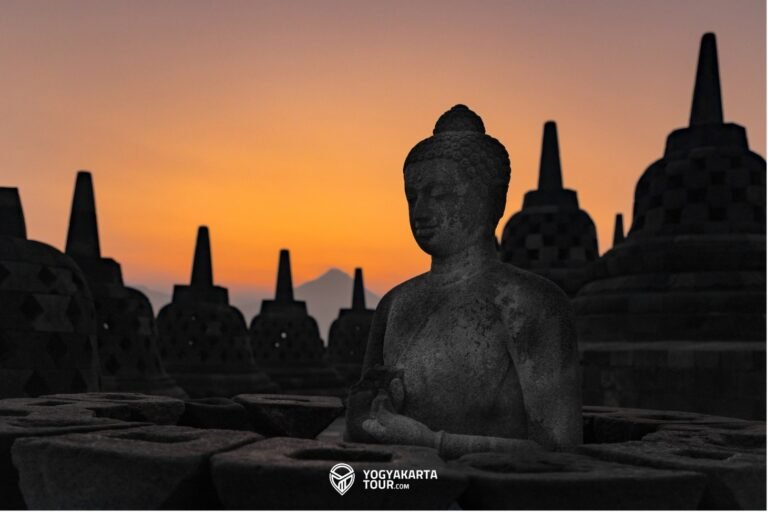
The sunrise entry to Borobudur is a separate early slot, around 04:30, before the temple area opens at 06:30. That early hour of near-empty terraces is the reason photographers pay for it. Stupas, dawn haze, Merapi on the skyline.
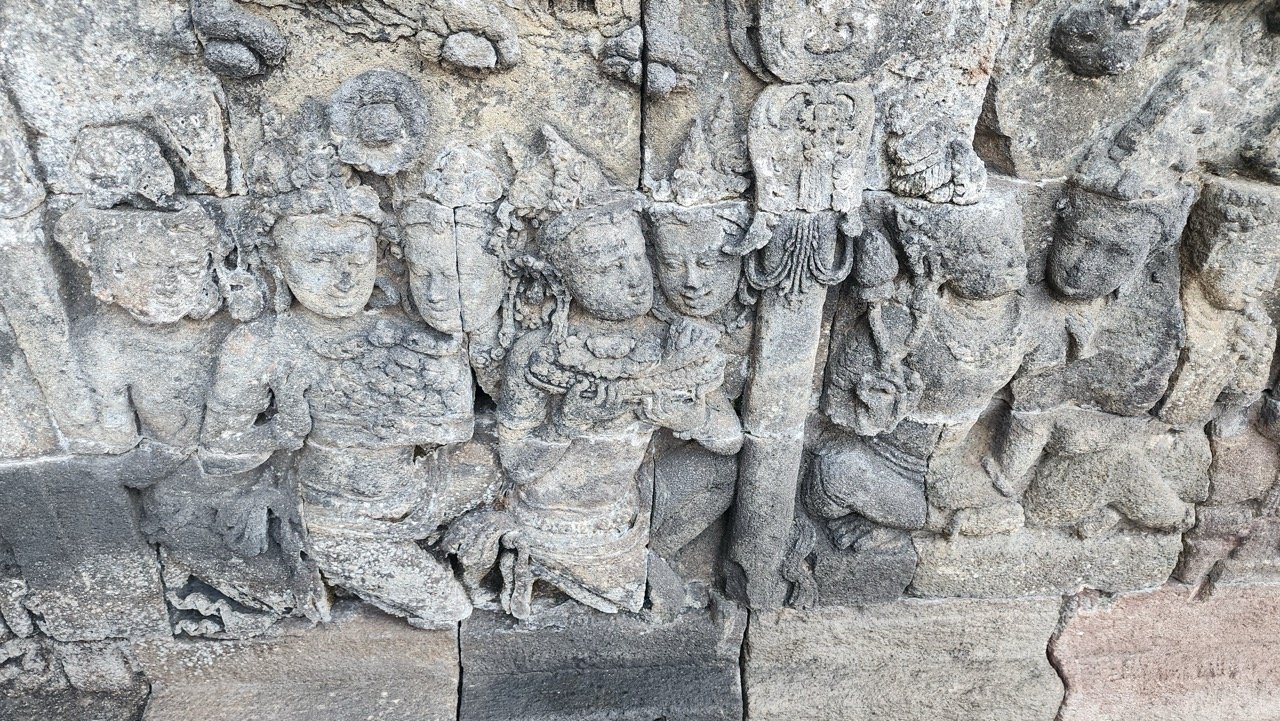
Once the public gates open, the terraces fill within an hour. Use that first hour for the relief panels along the lower galleries, where raking side light picks out the carving, and leave the top terraces for the wide shots you already have.
You will be asked to stay off the stupas and to keep to the paths. A sarong is included with the ticket, and shoulders should be covered.
Prambanan at the end of the day
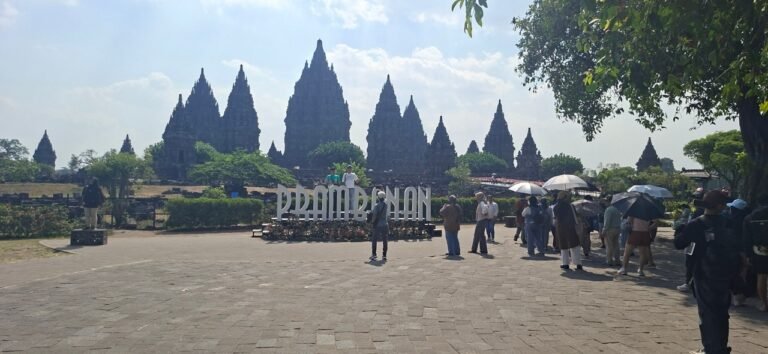
Prambanan is about 17 km east, roughly 45 minutes from the centre. The ticket desk runs 06:30–17:00 and the temple area closes at 17:30, so the last 90 minutes give you low sun on the stone and a clean silhouette facing west.
The three main temples are closed on Mondays, which also means fewer people on the other days. Shoot the spires from the north side in the late afternoon, then turn around for the sky behind the main shrine as the light drops.
If you stay for the Ramayana Ballet, which runs Tuesday, Thursday and Saturday from 19:30, you can shoot the open-air stage from May to October. Ask about photography rules when you buy the ticket.
Jomblang and the light beam
The beam at Jomblang arrives roughly between 10:00 and 12:00, when the sun is high enough to drop straight through the sinkhole into the cave floor.
The cave is about 60 km from the city, roughly two hours by road, and you descend 60 m on a rope. The daily quota is around 200 people, so book ahead. The ticket is Rp 500,000 and the descent is muddy, so wear shoes you can throw away and carry a plastic bag for the camera.
Inside, you want a fast wide lens and high ISO, because the cave floor is dark and the beam is bright. Expose for the light shaft and let the walls fall into shadow. A tripod is awkward on the muddy floor, and a monopod is often the better compromise.
Gear worth carrying
- One body and two lenses: a wide zoom for the viewpoints and a short telephoto for the reliefs and the spires.
- A tripod for Punthuk Setumbu and the blue hour.
- A fast prime for the cave if you have one, f/2 or better.
- A headtorch, spare batteries and double the memory cards you think you need.
- Rain cover and a dry bag. The wet season can turn a clear morning into a downpour by noon.
Light times at a glance
| Location | Best light | Notes |
|---|---|---|
| Punthuk Setumbu | Before sunrise, around 04:30–06:00 | Arrive before first light |
| Borobudur | Sunrise slot, then first hour after 06:30 | Sunrise around 04:30, area 06:30–16:30 |
| Prambanan | Last 90 minutes before close | Desk 06:30–17:00, area 07:00–17:30 |
| Jomblang cave | Beam roughly 10:00–12:00 | Morning trips, quota around 200 |
| Malioboro | After 17:00 | Street, always open |
Etiquette and photographing people
Ask before you photograph a face. That covers market traders, children, and anyone at prayer. A raised camera and a nod is usually enough, and a refusal costs you nothing.
Do not use flash inside the Kraton or at a ceremony, and do not climb on temple structures for an angle. Dress code applies at every site: shoulders and knees covered, sarong at the temples.
If you want a driver who understands light rather than just distances, say so when you book. The Yogyakarta day tours can be shaped around a shooting schedule, and the Yogyakarta tour packages list the two-day combinations. For weather context, the best time to visit guide is a useful check before you lock dates.
Frequently asked questions
How many days do I need for a photography tour?
Two days covers Punthuk Setumbu, Borobudur, Prambanan and Jomblang at a comfortable pace. One day works if you drop the cave and shoot only the temples.
Can I bring a tripod to Borobudur?
Usually yes on the sunrise entry, when the terraces are quiet. Ask your guide, and keep it out of the walkways once the public gates open at 06:30.
What lens do I need for Jomblang?
A fast wide lens. The cave is dark and the beam is very bright, so high ISO and a wide angle handle the contrast better than a long lens.
Is the sunrise slot worth the extra cost?
For photography, yes. You get the terraces before the crowds and the best light of the day. The standard opening at 06:30 is the fallback.
Can I photograph the Ramayana Ballet?
Ask when you buy the ticket. Flash and tripods are usually restricted during the performance, and the open-air stage from May to October is easier to shoot than the indoor theatre.
What if it rains?
December to March brings afternoon storms. Shoot the temples early and keep the cave and indoor sites as backup for the afternoon.