A Yogyakarta batik tour is the easiest way to spend a day with the city’s makers instead of its monuments. You wax and dye a cloth in the morning, walk a market that sells batik by the metre at midday, then watch silver being worked in Kotagede or pots being thrown in Kasongan. Everything sits within a short drive of Malioboro, so half a day covers two stops and a full day covers four.
This guide gives the order we use, what each stop is like, and what things cost. It assumes a car with a driver.
What a Yogyakarta batik tour includes
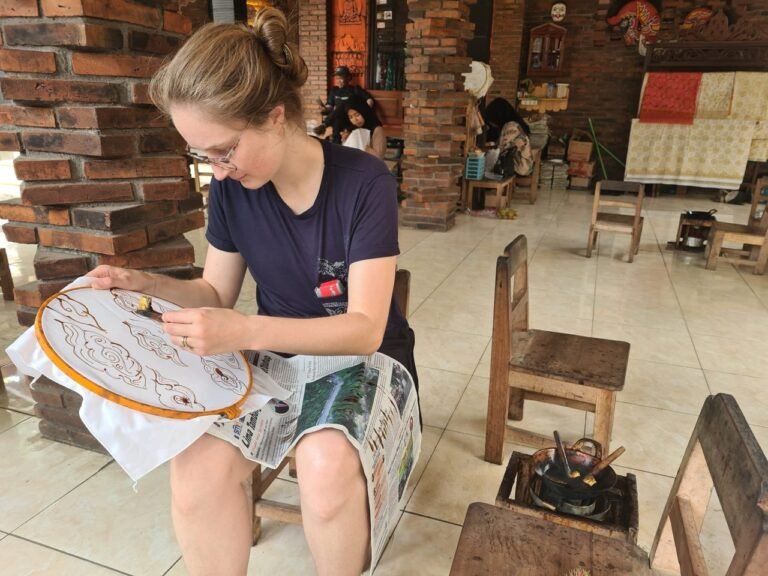
Most tours combine three things: a workshop where you make a small piece, a market stop for finished cloth, and one craft village. The workshop changes how you look at the rest. Once you have held a canting pen for an hour, the prices in Beringharjo stop looking random.
Ask two questions before you book: does the fee include materials and the piece you make, and is the studio teaching hand-drawn or stamped batik? Hand-drawn work takes hours for a handkerchief. Stamped cloth covers a sarong in minutes and is what most affordable shirts are made from.
The workshop: wax, dye and one small piece
A session starts with a blank cotton square, a pot of hot wax and a canting, the small copper pen that holds the wax. You draw a pattern, the wax resists the dye, and the cloth goes into a dye bath. Where the wax cracked, dye seeps in, which is where the fine spiderweb lines in old batik come from.
Expect one to two hours and an imperfect result. That is normal. The value is in the steps: waxing, dyeing, boiling out the wax, drying. Studios usually let you watch the boiling out.
Beringharjo market, in the daytime
Beringharjo is the city’s main market and the fastest place to see how much batik exists. Stalls on the upper floors stack sarongs, shirts and lengths of cloth; the ground floor sells snacks and everyday goods. It runs in the daytime, and by late afternoon some stalls are packing up.
Prices are negotiable. Start below what you want to pay, stay friendly, and be ready to walk away. If a seller shows a printed tag and says the price is fixed, take that as the price.
Hold the cloth up to the light: hand-drawn batik shows the pattern on both sides, printed cloth shows a pale reverse. Ask about colour too. Natural and chemical dyes both bleed a little, so wash separately in cold water.
Kotagede and the silver workshops
Kotagede was the old capital of the Mataram kingdom, and its lanes are still full of silversmiths working in small home studios. You can watch a piece take shape from a flat sheet: annealing, chasing, soldering, polishing. Many workshops sell jewellery at the front and let you try a simple hammering step at the bench.
Silver is priced by weight plus workmanship, so ask for both numbers. A light filigree piece with heavy handwork can cost more than a heavier plain ring. Compare three shops on the same street.
Kasongan pottery
Kasongan is a village of potters south of the centre. The work runs from big garden jars and terracotta figures to tableware, and most studios fire in kilns behind the shop. It suits you if you want something large and are willing to pay for shipping, or if you simply want to watch a wheel being thrown.
Pottery is heavy and brittle. Ask the studio to pack small pieces for a flight, and ask for the packed weight and courier cost before you commit to a jar.
A half-day route that works
Workshop in the morning, Beringharjo at midday, one village in the afternoon. That is a comfortable half day if you start early and keep lunch short. A full day adds the second village and a stop at Taman Sari, which is open 09:00 to 15:00 with last entry at 14:30.
- 08:30, workshop, about two hours.
- 11:00, Beringharjo, one hour.
- 12:30, lunch near Malioboro.
- 14:00, Kotagede or Kasongan, one to two hours.
Reverse the order if you want the market first: workshops are quieter after lunch and the market is more alive in the morning. Keep the village stop flexible.
Costs and what to buy
Tour prices are quoted in US dollars; market, workshop and shop prices are in rupiah. A half-day craft tour with a car and driver is priced per group. Workshop materials are sometimes charged on top of the fee, so ask before you sit down. Compare Yogyakarta tour packages to see how a craft half day fits with a temple day.
Worth buying: a sarong in a pattern you chose, a batik shirt you will really wear, a small silver piece, one pottery bowl that survives the flight. Worth skipping: anything sold as antique without a story, and cloth sold before you have checked the reverse.
If you have room in the plan, pair the craft morning with a temple afternoon. The Yogyakarta city centre guide covers the streets around Malioboro and Beringharjo, and the Taman Sari guide explains the water castle within walking distance. Book the day through Yogyakarta tours.
Frequently asked questions
How long does a batik workshop take?
One to two hours for a small piece such as a handkerchief. Larger cloth needs more time.
Can I buy batik at Beringharjo market?
Yes, it is the main place in the city for batik by the metre, plus shirts and sarongs. Go in the daytime and expect to negotiate.
Is Kotagede silver expensive?
It depends on weight and workmanship, so ask for both figures. Small pieces with heavy handwork can cost more than larger plain ones.
What should I wear to a workshop?
Dark clothes and no trailing sleeves. Wax and dye stain, and the piece you make will still be damp when you leave.