A Yogyakarta historical tour usually means two districts rather than one monument. Kotagede, the old royal seat with its mosque, cemetery and silver workshops, and the old city around the Kraton and Malioboro, where the colonial street plan still sets the shape of the blocks. Between them they hold most of the city’s story, and they are far enough apart that you need a plan.
Two districts, one story
Most visitors see the Kraton and stop there. The Kraton is the later court, not the beginning of the story. The earlier capital is at Kotagede, and the streets between the palace and the railway carry the layer that came after: offices, arcades, churches and warehouses built when the Dutch ran the trade.
Put the three together and you get a sequence: the first court, the later court, the colonial city. That sequence is what a historical tour is for.
Kotagede, the first capital
Kotagede was the seat of the Mataram kingdom before the court moved, and the old layout is still readable. A market, a great mosque with its own wall, and the royal cemetery sit within a few minutes of each other, with houses packed tight around them.
This is a living neighbourhood, not a heritage park. Motorbikes thread through lanes built for carts, and the cemetery is still a place of pilgrimage rather than a photo stop. Walk slowly, dress politely, and ask before you photograph anyone at prayer or at work.
The other reason to come is silver. Kotagede is where the city’s silversmiths work, and several workshops sit in the lanes around the mosque.
The old city and the Dutch-era streets
The old city is the grid between the Kraton and Malioboro. Look up: shuttered windows, deep verandas, tiled roofs pitched for heavy rain, and office fronts that were built for a colonial administration and now hold banks, cafes and shops.
The street plan itself is the exhibit. Wide avenues laid out for carriages and trade, narrow lanes behind them for residents, and the Kraton at the southern end as the anchor. The Yogyakarta city centre guide maps the main streets and the walk between them.
Malioboro is free and best after 17:00, when the food carts come out and the street fills. Come earlier if you want photographs of the buildings without a crowd in the frame.
A short history timeline
- Mataram era. Kotagede is the royal seat. The mosque, the cemetery and the market layout date from this period.
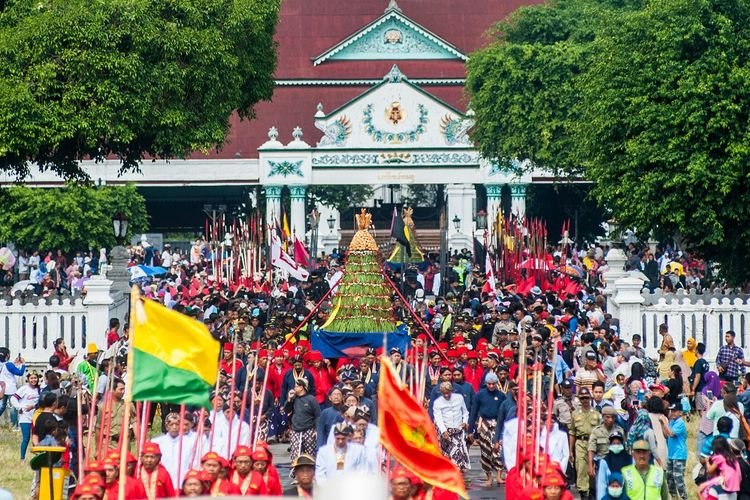
- Court moves, kingdom splits. The palace relocates and the Kraton becomes the centre of the Yogyakarta court, with its own ceremonies and its own line of sultans.
- Colonial period. Dutch administration and trade reshape the streets between the palace and the station. The arcades and offices you walk past today are from this layer.
- Independence onwards. The Kraton stays a working palace, Kotagede’s silver trade continues, and the old city becomes the commercial heart.
None of this needs a date to make sense. The buildings do the dating for you once you know which layer you are looking at.
The walking route
- Morning in Kotagede. Start at the market, then the mosque and the cemetery wall.
- Silver workshop. Allow an hour to watch a piece being made.
- Drive to the Kraton. It is open Tuesday to Sunday, 08:30 to 14:30, closed Monday, so the afternoon slot is tight.
- Walk north from the Kraton through the old city streets towards Malioboro.
- Finish at Malioboro after 17:00, or at Beringharjo market earlier in the day for batik and snacks.
The Kraton ticket starts at around IDR 15,000. The Kraton guide explains what you are looking at inside the walls.
Silver workshops in Kotagede
The workshops are small, family-run and open to visitors who ask. You will see filigree work, where fine wire is shaped into panels and soldered by hand, alongside heavier pieces made for hotels and export.
Buying direct is part of the appeal. Prices vary with weight and hours of work, so ask how a piece was made before you ask what it costs. Cash is useful. Card machines exist but are not universal in the lanes.
Practical notes for the day
Wear shoes you can walk in and clothes that cover shoulders and knees, because both the mosque and the Kraton expect it. Bring water and cash. Monday is the day to avoid for this route, since the Kraton is closed.
Allow a full day if you want both districts without rushing. A half day gets you Kotagede or the old city, not both. The two are separated by a drive through traffic, not by distance on a map.
Taking a Yogyakarta historical tour with a guide
A guide earns their fee in Kotagede more than anywhere else. The lanes have no signs, the cemetery has rules that are not written down for visitors, and the best workshops are the ones without a shopfront. In the old city, a guide can point out which facade belongs to which period, which is hard to do alone.
Historical routes are quoted per itinerary, since the vehicle, the guide and the pickup point change the total, and a workshop visit may add time. If you want the history folded into a longer trip, the tour packages combine city days with Borobudur and Prambanan. Otherwise start from Yogyakarta day tours and ask for a full-day Kotagede and old city route.
Frequently asked questions
How far is Kotagede from central Yogyakarta?
It is a separate district a short drive from the centre, not a walk from Malioboro. Plan transport for the morning and continue to the Kraton afterwards.
Is the Kraton open on Monday?
No. The Kraton is open Tuesday to Sunday, 08:30 to 14:30, and closed on Monday. Build the old city half of the route around that.
Can I buy silver directly from the workshops?
Yes. Many workshops in Kotagede sell what they make, and buying direct is normal. Ask how a piece was made and bring cash.
Do I need a guide for the old city?
No, but it helps. The streets are safe and walkable, yet the colonial buildings carry no explanation on site, and a guide can tell you which layer you are looking at.
How long does the full route take?
A full day for Kotagede and the old city at an unhurried pace. A half day covers one of the two districts.