Is Yogyakarta safe? For most visitors, yes, and the trip passes without an incident worth retelling. That answer is not the same as “nothing can go wrong”. The risks here are ordinary and specific: traffic, a phone left on a cafe table, an upset stomach, a volcano that occasionally reminds the city it is there. Knowing which ones matter is most of the preparation.
Is Yogyakarta safe? The short answer
Yogyakarta is a student city with a large tourist economy, and visitors are not a rare sight. Violent crime against foreigners is not a pattern you need to plan around. The incidents that do get reported are small: a bag lifted from the back of a becak, a phone taken from a table, a fare that grew between the quote and the payment.
The bigger risks are environmental. Road traffic causes more harm to visitors than crime does, and the wet season, the heat and Merapi each ask for a little respect. None of that should stop you from coming. It should change how you cross a road and what you do with your phone.
Traffic is the risk you will actually meet
Traffic moves on the left, and the mix on any main road includes cars, motorbikes, becak, trucks and pedestrians, often in the same lane. It looks worse than it is, because speeds are low, but low speed still hurts when a motorbike meets a pedestrian.
Cross at a steady pace and let the traffic adjust, rather than sprinting between gaps. Look both ways even on a one-way street. At night, wear something visible and avoid walking on unlit roads outside the centre, where a becak without a light is a real hazard.
If you ride a motorbike taxi, wear the helmet and keep your bag off your shoulder. If you would not ride one at home, do not start in Yogyakarta.
Petty theft and the phone in your hand
Bag snatching from a passing motorbike is a risk in cities across the region, and Yogyakarta is no exception. The defence is simple: keep your bag on the side away from the road, hold your phone with a hand strap or put it away near a junction, and do not leave a phone on a table at a pavement cafe.
Keep cash split between two places, leave the passport in the hotel safe and carry a photo of the ID page. If something is taken, the loss is annoying rather than catastrophic, and a police report helps with insurance.
Merapi and volcano status
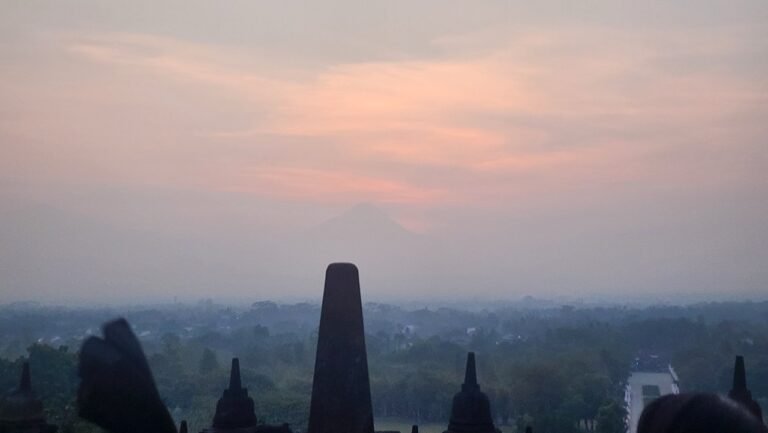
Merapi is an active volcano about 30 km from the city, roughly an hour to Kaliurang. It is also the reason many people come, and the reason the morning jeep tours exist. The mountain has quiet years and loud ones.
Indonesian authorities publish an alert level and an exclusion zone, and operators adjust or cancel tours when the level rises. Ask your operator what the status is on the day, and take a cancellation policy seriously when you book. Do not walk past a closed trail for a better photo. Trails close for a reason, and the reason is usually rockfall or gas.
Food, water and stomach trouble
Tap water is not drinking water. Drink bottled or filtered water, including when you brush your teeth if you have a sensitive stomach, and check that the ice in your drink came from a filtered supply. In cafes and restaurants that cater to visitors, this is normally fine.
Street food is one of the best reasons to be in Yogyakarta. Choose stalls that are busy and cooking in front of you, rather than food that has been sitting. Bring rehydration salts and a stomach remedy, and give yourself an easy day if something disagrees with you rather than pushing on to a temple.
Heat, rain and the ground under you
The dry season runs May to September and the wet season November to March. Heat is the quieter problem: a temple morning with little shade and no water will flatten you by lunchtime. Carry a bottle, wear a hat and sit down when you feel light-headed.
Wet season rain arrives hard and fast. Stone steps at the temples turn slick, and the drains in the city can back up during a downpour. Yogyakarta also sits in an earthquake zone. If the ground shakes, follow the staff, get outside and away from glass, and do not use the lift.
Precautions that make a difference
- Book tours through an operator who confirms the plan in writing.
- Use the official ticket desk at temples and the official counter at the airport.
- Keep the hotel address in Indonesian on your phone for drivers.
- Carry a copy of your passport, not the original, on temple days.
- Check the Merapi alert level before a jeep tour, and ask about cancellation terms.
- Tell someone your plan for a solo early start, and keep your phone charged.
Most of this is the advice you would give a friend visiting any large city. The parts specific to Yogyakarta are the volcano, the wet season and the volume of motorbikes, and all three are manageable with a little planning.
If you would rather the logistics were handled, a guided trip removes the driving, the ticket queues and the timing decisions. The Merapi jeep tour guide explains how the sunrise trips work, and the guide to the best time to visit covers the seasons in more detail.
Browse Yogyakarta day tours for day trips with a driver who knows the roads, or compare the Yogyakarta tour packages if you want the whole trip arranged.
Frequently asked questions
Is Yogyakarta safe for solo travellers?
Yes, with the usual city precautions. Keep your phone and bag secure, avoid unlit roads late at night, and tell your hotel where you are going for an early start.
Is it safe to visit Merapi?
Jeep tours run to viewpoints outside the exclusion zone, and operators follow the official alert level. Ask what the status is on the day and book with someone who will cancel if it changes.
Can I drink the tap water in Yogyakarta?
No. Drink bottled or filtered water, and be careful with ice from street stalls. Restaurants that serve visitors normally use filtered ice.
Is the wet season a bad time to visit?
Not bad, just wetter. Rain comes in heavy bursts, temple steps get slippery, and you should build slack into the day. The dry season runs May to September.
What is the most common problem for tourists?
Traffic and minor theft, in that order. Both are avoidable with ordinary care, and neither is specific to Yogyakarta.
Are guided tours safer than doing it yourself?
A good operator removes the driving and the night-time navigation, which is where most risk sits. You still need to wear a helmet, watch your bag and drink water.