Parangtritis beach, about 27 km south of Yogyakarta in Bantul, is the setting for the best-known myth in Javanese culture: the story of Nyai Roro Kidul, the queen of the Southern Sea. The legend is not just folklore for tourists — it is tied to the kraton, to the founder of Mataram, and to a ceremony the palace still performs every year.
Parangtritis at a glance
| Location | Parangtritis, Kretek, Bantul, about 27 km south of Yogyakarta |
| Known for | Black-sand beach, dunes, sunset, and the Roro Kidul legend |
| Sacred sites nearby | Parangkusumo, Parangwedang hot spring, Parangbolong |
| Swimming | Not safe — strong currents and waves; stay near the shore |
Who is Nyai Roro Kidul?
Nyai Roro Kidul — also called Kanjeng Ratu Kidul, the Queen of the South — is the mythical ruler of the Southern Sea (the Indian Ocean) in Javanese belief. Her court is said to lie beneath the waves, and Parangtritis is one of the places where the boundary between her world and ours is considered thinnest.
There are several versions of her origin. The best known is the story of a princess who was exiled or cursed and found her way to the sea, where she became its queen. The details change from one telling to another, which is normal for oral tradition: the constant is that she rules the ocean and that the kraton of Yogyakarta has a special relationship with her.
The kraton connection
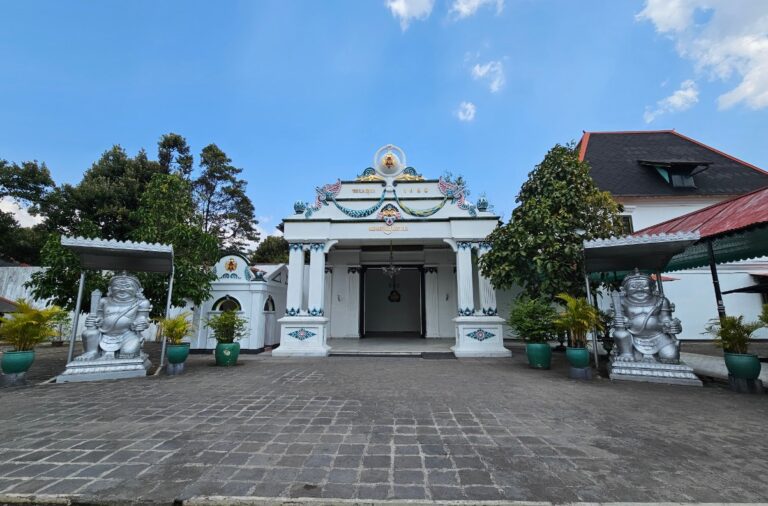
The legend is tied to Panembahan Senopati, the founder of the Mataram kingdom, who is said to have met Ratu Kidul during his ascetic practice on the south coast. In the Javanese telling, the meeting became a mystical alliance — sometimes described as a marriage — between the ruler of Mataram and the queen of the sea, and it is one reason the sultans of Yogyakarta are still regarded as having a spiritual link to the Southern Sea.
Whether you read that as history, literature or belief, it explains why Parangtritis is treated with respect rather than as an ordinary beach resort.
The Labuhan ceremony
Every year, on the 30th of Rejeb in the Javanese calendar, the Kraton Yogyakarta performs the Hajad Dalem Labuhan as part of the anniversary of the sultan’s coronation. The word labuh means to cast away or set adrift, and the ceremony is a prayer to discard bad qualities.
Objects called uborampe labuhan — mostly cloth, clothing and personal items belonging to the sultan — are carried from the kraton and handed over to the custodians at Parangkusumo, where they are offered to the sea. The same ceremony is held at Mount Merapi and Mount Lawu, the other spiritual points of the kraton.
If you happen to be in Yogyakarta when it takes place, Parangkusumo fills with palace officials, abdi dalem and visitors. It is a religious event, not a show, so keep a respectful distance and do not block the procession.
The green dress custom
You will hear, from guides and locals, that visitors should not wear bright green at Parangtritis. The story is that green is the queen’s colour and that wearing it can offend her or attract bad luck. There is no rule enforced at the gate, and plenty of visitors ignore it, but it is a genuine local custom rather than an invention for tourists. If you want to be careful, wear another colour — it costs nothing.
What to see and do
- The beach itself — black volcanic sand, strong surf, and the cliffs of the Parangtritis headland to the east.
- The dunes — the sand hills behind the beach are a popular spot for photos and, increasingly, for paragliding.
- Parangkusumo — the sacred spot where Senopati is said to have met Ratu Kidul, a short drive west of Parangtritis.
- Parangwedang — a warm sulphur spring believed to help skin complaints, with bathing pools.
- Sunset — the main event for most visitors, with the sun dropping straight into the ocean on clear evenings.
- ATV and jeep rides — available along the beach; agree the price before you start.
Safety at Parangtritis
The sea here is not for swimming. The waves are strong, the slope is steep, and there are rip currents along the beach. People drown at Parangtritis every year, usually after ignoring the warning flags or going in at dusk. Stay in the shallow water, keep children close, and do not go past the lifeguards’ markers.
How to get there
Parangtritis is about 27 km from central Yogyakarta, roughly 45 minutes to an hour by car or motorbike, and there are buses from Giwangan terminal. Most visitors go in the late afternoon for sunset and return to the city after dark, so arrange your transport in advance rather than relying on finding a ride at 19:00.
It combines well with the beaches further east in Gunungkidul, or with a stop at the kraton on the way out. Our tour packages include the south coast as a half-day trip.
Frequently asked questions
Who is Nyai Roro Kidul?
The mythical queen of the Southern Sea in Javanese belief, also called Kanjeng Ratu Kidul. Parangtritis is one of the places most closely associated with her.
Is the legend of Roro Kidul real?
It is a belief and a literary tradition, not a documented historical event. What is real is the kraton’s Labuhan ceremony, which continues every year.
Can you swim at Parangtritis?
No. The currents and waves are dangerous. Stay in the shallows and follow the lifeguards’ warnings.
Should I avoid wearing green at Parangtritis?
Many locals say so, as green is considered the queen’s colour. It is a custom, not an enforced rule.
When is the Labuhan ceremony?
On the 30th of Rejeb in the Javanese calendar, as part of the sultan’s coronation anniversary. The date moves each year in the Gregorian calendar.
Sources and further reading
- Labuhan Parangkusumo dan Labuhan Lawu — official Kraton Yogyakarta site (ceremony and offerings).
- Keraton Yogyakarta gelar Labuh di Laut Selatan — RRI, 2026.
- Tradisi labuhan di Parangtritis — academic paper on the ceremony.
Written by the Yogyakartatour.com team, a licensed local operator based in Yogyakarta. The legend is presented as Javanese belief and tradition, with the ceremony details drawn from the kraton’s own publications.